










A guide to the Internet of Behaviors (IoB)
Writer :By: Admin


The Internet of Things (IoT) connects devices to report their state. The Internet of Behaviors (IoB) uses the data from those devices and other systems to model and predict actions. It is an architectural approach that turns a stream of low-level events—a button tap, a GPS coordinate, a sensor reading—into a high-level behavioural insight.
Building an IoB system is primarily a software integration and data engineering challenge. It involves fusing multiple, often noisy, data streams into a coherent model that can be used to trigger an action, either by altering a system or notifying a user. This is a step beyond simple data analysis; it is the application of a model to influence an outcome.
The IoB data pipeline
A functioning IoB system is not a single product but a pipeline of processes. Each stage refines raw data, adding context until a behavioural model can be applied.
### Ingestion Data arrives from multiple sources: user interactions in a mobile app, location data from a vehicle tracker, transaction records from a payment gateway or sensor readings from IoT hardware. The first challenge is to normalise these varied formats and velocities into a consistent event stream for processing.
### Correlation This is the most difficult stage. Here, you connect otherwise unrelated events. For example, you might correlate a driver's accelerometer data with their mapping app's route data to distinguish between harsh braking for a red light versus a near-miss. Or you could fuse a user's activity in a community platform with their CRM record to understand their engagement level.
### Feature engineering Raw data rarely represents behaviour directly. You must transform it into features that a model can use. A series of timestamps and GPS coordinates becomes 'time spent at a delivery location'. A sequence of page views becomes a 'product evaluation journey'. This step is domain-specific and critical for model accuracy.
### Modelling With well-engineered features, you can apply machine learning. You might use clustering models to segment users by their behaviour, or sequence models like LSTMs to predict the next action in a process. The goal is to create a model that reliably maps input signals to a behavioural classification or prediction.
### Action An insight is only useful if it triggers an outcome. Based on the model's output, the system might send a push notification, re-order a user interface, alert a human operator or adjust the price of a product. The feedback from this action can then be used to refine the model further.
Applications and their trade-offs
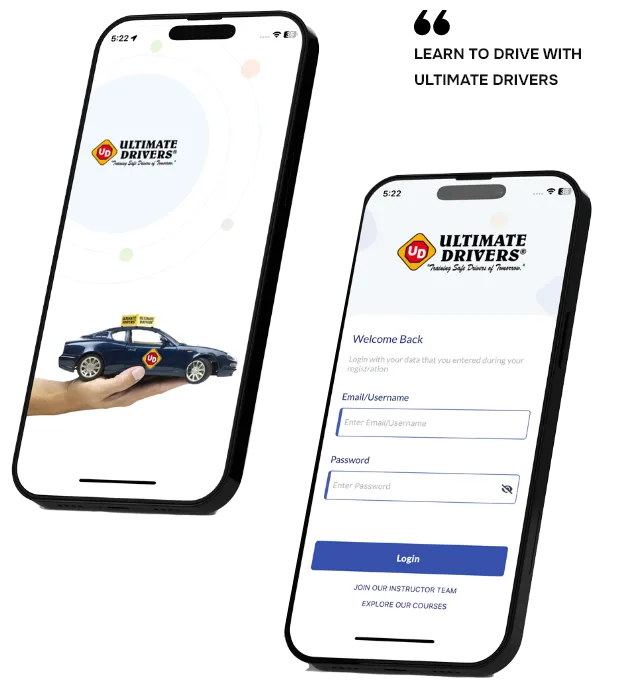
### ### Driver coaching An app can use a phone's GPS and accelerometer to identify patterns of harsh braking, acceleration or speeding. By correlating this with map data, it can distinguish aggressive driving from normal responses to traffic conditions. We have seen this in practice with driver education platforms. The trade-off is that continuous background monitoring impacts battery life and feels intrusive to some users.
### ### Supply chain logistics For an agri-commerce platform like Univia, you can correlate weather forecasts, real-time market prices and fleet GPS data. An IoB system could use this to suggest the optimal time to dispatch perishable goods, balancing transit risk against potential market price changes. The trade-off is model complexity; a simpler heuristic might be more reliable if data feeds are inconsistent.
### ### Member engagement For an association management platform like My Member, you can track how users interact with resources, sign up for events and participate in forums. An IoB model can identify members whose engagement is dropping, allowing for proactive outreach. The trade-off is privacy; members may not want their every click analysed for churn risk.
The engineering challenges of privacy
IoB systems create powerful behavioural profiles, which introduces significant privacy risks if not managed at an architectural level. Simply anonymising individual data streams is often insufficient, as behaviours and routines can be cross-referenced to re-identify individuals.
As developers, we must consider the trade-offs. Techniques like differential privacy add statistical noise to data, making it harder to identify individuals but also reducing the accuracy of the resulting models. Federated learning allows models to be trained on user devices without centralising the raw data, but this increases implementation complexity and limits the types of models you can build.
There is no technical solution that eliminates this tension. Building an IoB system requires you to choose a point on the spectrum between data utility and user privacy, and to be transparent about that choice.
IoB is not a single technology. It is an architectural pattern for processing event streams from different domains to build a predictive model of a specific behaviour.

Where IoB development goes next
The future of IoB is tied to developments in edge computing. As devices become more powerful, more of the data pipeline can be executed locally. Running feature engineering and model inference on a user's phone, for instance, can offer a better privacy posture and lower latency than a fully cloud-based architecture.
Another challenge is explainability (XAI). If a system makes a decision based on an inferred behaviour—for example, declining a transaction or flagging a driver—it is important to be able to explain why. Building auditable and interpretable models is a key area of work for any team building IoB systems.
Excelsior Technologies develops custom software, including AI systems and mobile applications that handle complex data processing. We have delivered projects for clients in sectors from driver education to real-estate association management.