









Apple’s AI isn’t the letdown. The AI hype is.
Writer :By: Admin
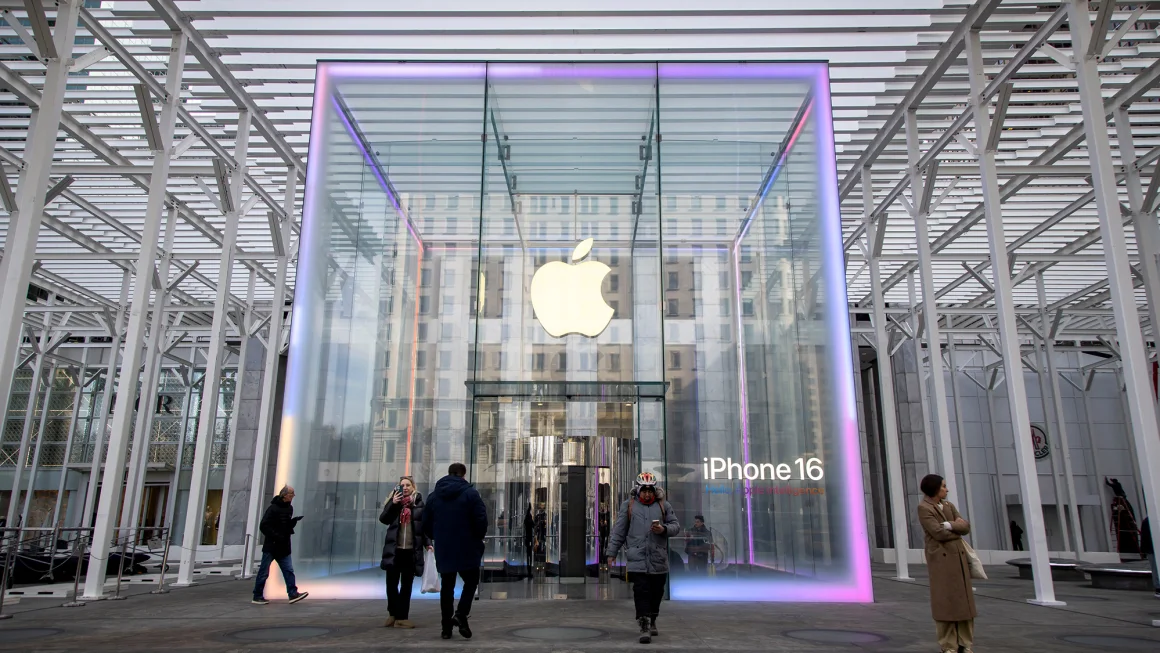
Apple’s recent AI announcements were met with a familiar wave of commentary: some saw pragmatic integration, others a failure of imagination. The reaction says less about Apple and more about the state of artificial intelligence. The real letdown isn’t a single keynote but the growing gap between what AI is marketed as and what it can reliably do in a production environment.
Apple’s choice was not to build the most spectacular AI. It was to build an AI it could ship to a billion users without compromising its brand on privacy and reliability. This is a reality check for an industry caught in a hype cycle.
The production gap of generative AI
Large language models demonstrate impressive fluency but fail in ways that are unacceptable in business-critical software. A model that hallucinates a legal precedent or fabricates a product specification is not a tool; it is a liability. For any system that handles sensitive information, such as for legal bodies like the Bar Council of Gujarat or community platforms like Indians in Germany, accuracy is not negotiable.
The technical challenges go beyond correctness. The cost of inference for large models can be prohibitive at scale. The models are black boxes, making it difficult to debug biases or guarantee consistent output. Relying on a third-party model API means you are building your product on a dependency you do not control, which can change its behaviour or pricing without notice.
Apple’s choice: privacy over power
Apple’s strategy prioritises on-device processing. This is a direct trade-off. It limits the complexity and raw power of the models they can run, but it offers significant advantages: user data remains private, and tasks execute with low latency without needing a network connection. This is the correct choice for personal, context-aware assistance.
When a task requires more power, Apple offloads it to what it calls Private Cloud Compute. This is still a compromise, an admission that on-device models have a ceiling. But by controlling the servers and making specific privacy commitments, Apple attempts to build a trusted alternative to sending your data to a general-purpose cloud AI. It is a deliberate engineering decision that chooses predictability and security over maximum capability.
How we build AI that ships
We build custom AI systems by focusing on the entire process, not just the model. An AI feature is a software feature. It requires the same discipline: rigorous testing, version control, monitoring and a plan for when things go wrong.
Our approach is to scope AI to solve specific, well-defined problems. Instead of attempting to build a generalist chatbot, we might build a system that automates document classification for a real-estate association like NAR India or one that suggests optimised routes for a food delivery service like Foodalios. The AI is a component in a larger, stable application.
For many use cases, the safest and most effective design is human-in-the-loop. The AI generates a draft, suggests a course of action or flags an anomaly, but a human makes the final decision. This combines the speed of automation with the accountability of human oversight, creating a system that is useful from day one without demanding perfect model performance.
A production AI system is not just a model API call. It's a pipeline of data validation, exception handling and human oversight.

The way forward: specific tools, not general intelligence
Apple’s perceived lack of ambition is simply a reflection of the engineering required to build a reliable product. The industry’s obsession with artificial general intelligence has created unrealistic expectations. The immediate value of AI is not in creating a synthetic mind but in building specialised tools that solve concrete business problems.
Your challenge is to identify a high-value, specific process that could be improved with a focused AI tool. Our job is to build that tool as a complete, reliable and maintainable software system. That is a less spectacular promise than AGI, but it is one we can deliver.