








Logo design evolution: Classic roots to modern innovations
Writer :By: Admin
A logo is a technical asset before it is a creative one. Its primary job is to function, legibly and consistently, across every medium you use. The evolution from ornate print marks to responsive digital systems is a story of changing technical constraints. As a company that provides UI/UX, web, mobile and print design services, we manage these constraints to create logos that work everywhere.
This is not a history of aesthetic trends. It is an explanation of the functional pressures that shaped the modern logo, from the limits of early printing to the performance demands of mobile applications.
Designed for print: Detail and its trade-offs
Early 20th-century logos were created for a single context: print. Intricate illustrations and detailed typography were marks of quality, feasible when the designer controlled the physical reproduction on stationery or signage. The asset was the final, printed object.
The technical trade-off was a complete lack of scalability. These designs were difficult to reproduce cleanly and failed entirely when scaled down. They were bound to their physical medium and unsuitable for the low-resolution screens that would follow.
Mid-century modernism: The shift to abstraction
The move towards geometric shapes and simplified forms was a functional choice as much as an aesthetic one. Abstract logos were easier and cheaper to reproduce consistently across a growing range of print media. A simple, bold mark held its integrity when printed on a vehicle, an invoice or a product package.
This abstraction was a necessary precursor to digital design. By distilling a brand into its simplest symbolic form, designers created marks that were more memorable and, unintentionally, better prepared for the pixel-based constraints of screens.
Early digital: Gloss, gradients and performance costs
The first wave of digital design brought skeuomorphism, where logos mimicked real-world textures like glass, plastic and metal. These 3D effects and gradients were intended to make new digital interfaces feel familiar. The approach created visually rich assets for desktop displays.
The costs were significant. These logos were often saved as large raster images (PNG, JPEG) that increased page load times, a serious problem for web applications. They rendered poorly at small sizes, becoming an unreadable blur in an app icon or browser tab. This style also dated quickly, leaving brands with a legacy look tied to an obsolete era of interface design.
Flat design: A direct response to mobile constraints
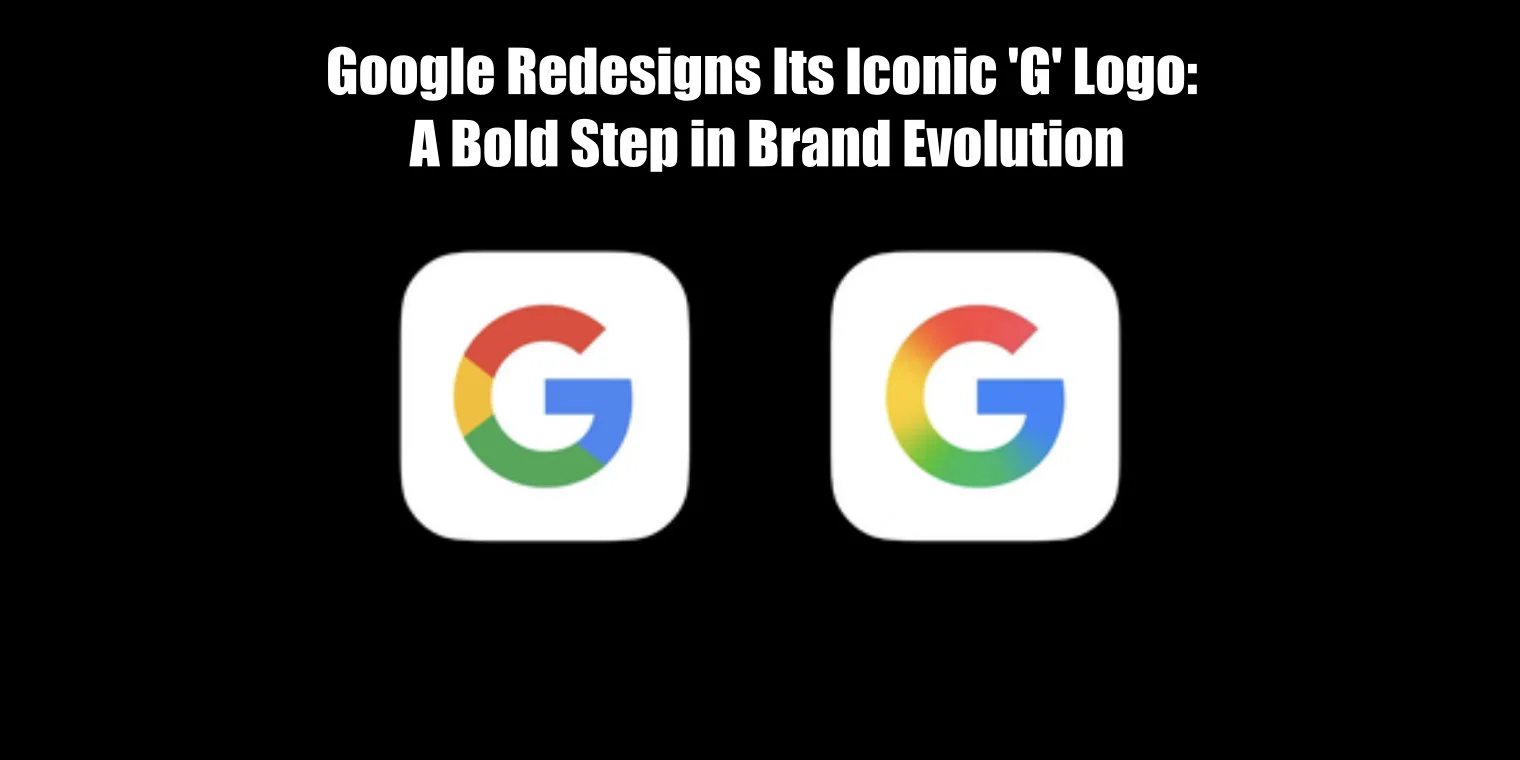
Minimalism and flat design were not just a trend. They were a direct technical response to the explosion of mobile devices. On a small, low-resolution screen viewed over a slow mobile connection, a logo has two critical jobs: be recognisable and load instantly.
Flat, vector-based logos (SVG) achieve both. They have minimal file sizes and scale perfectly to any resolution without degradation. This is essential in our work developing for Android and iOS, where application performance and a crisp UI are non-negotiable. The trade-off is that simple forms can appear generic if not supported by a strong, distinctive brand system.
Adaptive systems: One logo, many contexts
Today, a single static logo file is not enough. A modern brand needs an adaptive logo system. This is a set of logo variations—from a full-lockup with wordmark and tagline to a simple icon or logomark—with rules defining which version to deploy in a given context.
Our UI/UX design process delivers these systems. A large screen on a web app might get the full logo. A mobile app header might use a smaller wordmark. The 16x16 pixel favicon in a browser tab will use the simplest possible icon. This is not just a design exercise; it is a development one, implemented with code to ensure the correct asset is served for each user's viewport. It is the only way to guarantee brand consistency and optimal performance across every digital touchpoint and our print media work.